
Kitchen renovation tips: Designing for the realities of daily life

Updated: Jul 11

When we looked back at our most-saved Instagram posts, one space stood out. Across the various projects and genres, there was no doubt this is everyone's favourite part of the home, or at least, one that piques our interest.
Welcome to the kitchen.
We aren’t all chefs, and not everyone needs a dedicated coffee station, but we do seem to gravitate towards the kitchen. One thing's for sure - we love spending time there, and we want to know how to make the best of it. As such, we sat down with our interior designers for some insights on how they design a kitchen for the way people actually live.
Kitchen design is a massive topic, and there is no "one-size-fits-all" set of rules because every household has such different habits. There's plenty more to share, so we'll likely be rolling out a few more articles on this in the future, but for now, let's start with some of the essentials.
A kitchen that can take the heat

If you do use your kitchen, your choice of countertop is one decision that will dictate your daily peace of mind. Sintered stone has significantly risen in popularity over the years not without reason - it’s one of the few materials that doesn't require you to be overly careful with it.
As it's created under intense pressure, the surface becomes dense. In practical terms, that means you can move through a Sunday roast or a dinner party without constantly hovering over your guests with a coaster. It’s built for those frantic moments where you need to set a hot pan down immediately, or where a splash of balsamic vinegar goes unnoticed until the next morning. Since the surface is non-porous, those spills don't leave a mark.
Why we always design to the ceiling

In a typical Singapore home, every square inch has to earn its keep. Small kitchens require a bit of strategic Tetris to fit in all the modern essentials - your air fryer, stand mixer, and coffee gear. Our designers almost always suggest full-height cabinets to solve this storage puzzle. By utilising the entire vertical height of the room, you create dedicated niches for those bulky appliances, finally freeing up your countertops for food prep.
Think of the highest cabinets as your kitchen’s "archive" zone, the spot for festive platters you only pull out once a year. This keeps your lower, reachable shelves clear for the things you grab every day.

By closing the gap between the cabinet and the ceiling, you are also eliminating the "grease trap" where dust and oil usually settle. When the continuous line from floor to ceiling draws the eye upward, even the most compact HDB kitchen can feel taller and more expansive.
Designing the kitchen for your future self

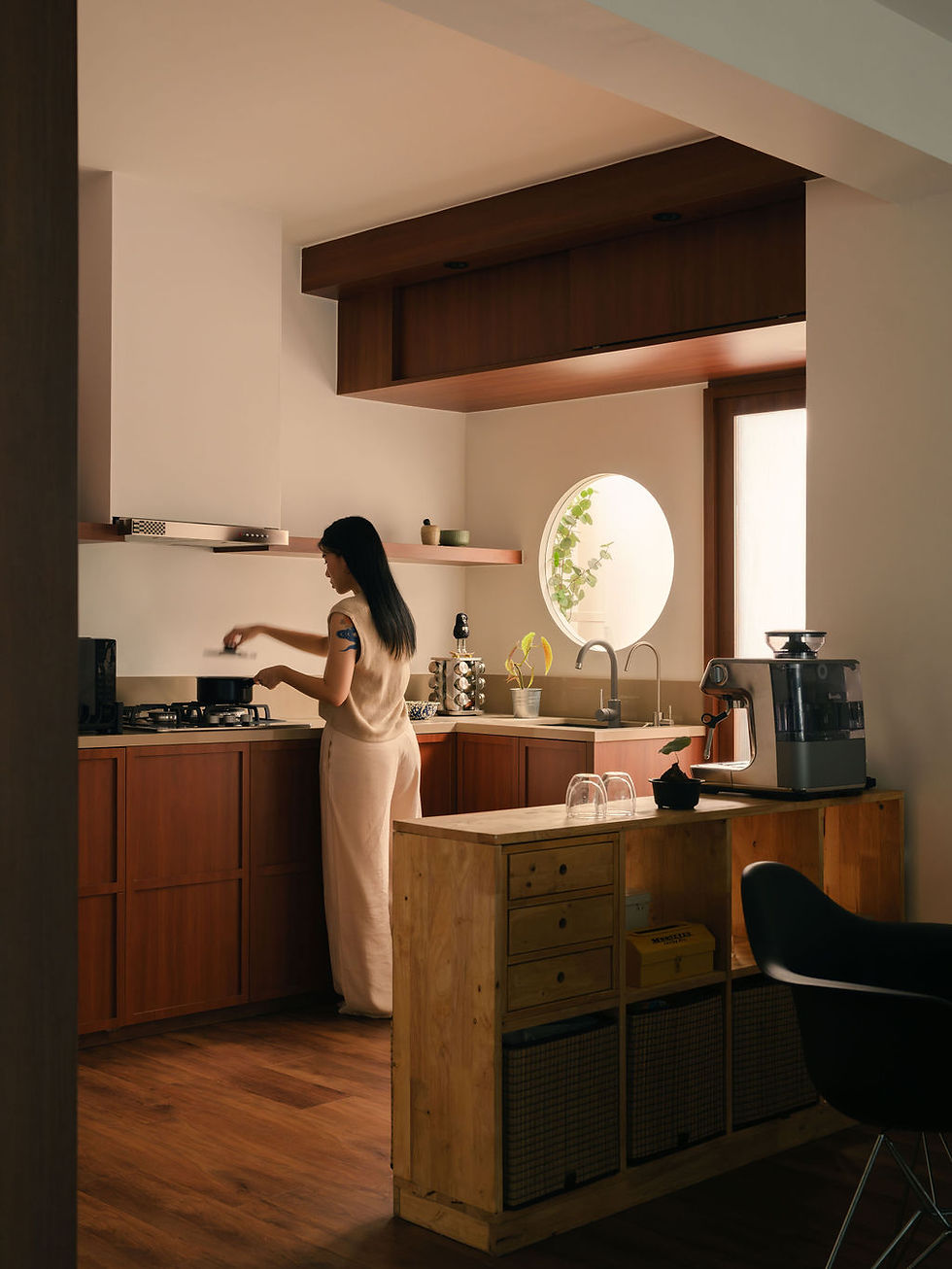
A truly efficient kitchen is one that is centered on your specific habits rather than a standard template, which is why we deep-dive into your lifestyle during our design consultation. It’s worth coming prepared with a list of your non-negotiables, whether you need a professional-grade baking station or simply a streamlined space for morning coffee or hosting.
For most kitchens, we often recommend segregating wet and dry zones to create an intelligent workflow. By planning for this divide, we can map out a logical sequence that keeps the next step of any task right where you need it.
Take for instance, your main workspace should be where ingredients land after being washed, and your cooking zone is a half-step away from where you’ve finished chopping. There should also be power points where you need them.
Pro-tip for dishwasher:
A standard dishwasher is typically 85cm tall, which pushes the countertop height to roughly 90cm. For shorter homeowners, this can lead to shoulder strain during food prep. If a large-capacity dishwasher is essential but the height is a concern, consider a split-level countertop. Placing the dishwasher under a higher section, like a dedicated coffee nook or appliance station, allows the main prep area to remain at a more ergonomic height.
Final thoughts

Ultimately, a great kitchen is one that makes your daily life a bit smoother. Whether you’re a serious home cook or someone who just wants a calm, organised spot for a morning coffee, the goal is to have a space that helps you out and not get in your way.
We’ve only covered the basics here, but focusing on these foundations is a good start toward building a kitchen that’s both tough and easy to use. If you’re starting to think about your own layout, we’re always up for a chat to help you figure out the best way to piece it all together.


Comments